



Introduction
In a democracy like India, the judiciary is often described as the last refuge of the common man. But before the late 1970s, access to the courts was difficult—legal procedures were rigid, costly, and time-consuming. The poor, marginalized, and voiceless often had no means to fight for their rights.
That changed with the advent of Public Interest Litigation (PIL). PIL allowed ordinary citizens, activists, NGOs, and even journalists to approach the courts on behalf of those who could not fight for themselves. Over the years, PIL has transformed the judiciary into a people’s court and has become a powerful tool of social justice.
What is Public Interest Litigation (PIL)?
- PIL is litigation filed not for personal gain but for the protection of public interest.
- It allows any person or group to file a petition on behalf of those who are disadvantaged or whose rights are violated.
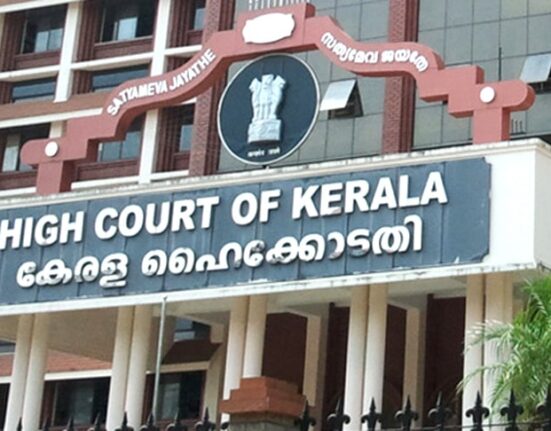
- PILs are generally filed under Article 32 (Supreme Court) or Article 226 (High Courts).
In simple words: If injustice is being done to a group of people, anyone can raise their voice in court through a PIL.
Historical Evolution of PIL in India
- Post-Emergency Era (1976–1980s)
- The Emergency (1975–77) highlighted the need for stronger protection of fundamental rights.
- Judges like Justice P.N. Bhagwati and Justice V.R. Krishna Iyer championed PIL to make justice accessible.
- Early Cases
- Hussainara Khatoon v. State of Bihar (1979): Highlighted plight of undertrial prisoners. Court ordered their release, making PIL a tool for the poor.
- S.P. Gupta v. Union of India (1981): Expanded the concept of locus standi—any person can approach the court for public interest.
- 1990s Onwards
- PILs expanded into areas like environment, corruption, human rights, women’s safety, and governance reforms.
Objectives of PIL
- To provide justice to marginalized groups.
- To enforce fundamental rights guaranteed by the Constitution.
- To hold the government accountable.
- To ensure social and economic justice in line with the Directive Principles of State Policy (Part IV).
Areas Covered by PIL
- Human Rights – Protection of bonded laborers, prisoners, children, women.
- Environment – Ban on harmful industries, protection of forests and rivers.
- Corruption & Governance – Transparency in public institutions.
- Public Health & Safety – Medical facilities, road safety, food safety.
- Education & Welfare – Midday meals, right to education, shelter for homeless.
Landmark PIL Cases
- Hussainara Khatoon v. State of Bihar (1979)
- Exposed inhuman conditions of undertrial prisoners.
- Result: Strengthened Right to Speedy Trial.
- M.C. Mehta Cases (1986 onwards)
- Environmental activist M.C. Mehta filed multiple PILs:
- Closure of polluting industries near Ganga.
- Oleum gas leak case—established Absolute Liability principle.
- Result: Birth of environmental jurisprudence in India.
- Environmental activist M.C. Mehta filed multiple PILs:
- Vishaka v. State of Rajasthan (1997)
- Filed after the gang rape of Bhanwari Devi, a social worker.
- Court framed Vishaka Guidelines to prevent workplace sexual harassment.
- Prakash Singh v. Union of India (2006)
- PIL on police reforms.
- Court directed separation of investigation from law and order duties.
- Right to Food Case (PUCL v. Union of India, 2001)
- Highlighted starvation deaths despite surplus food stocks.
- Court directed implementation of Midday Meal Scheme.
Role of PIL in Strengthening Democracy
- Access to Justice – Poor and marginalized can now approach courts indirectly.
- Judicial Activism – Courts actively intervene in governance issues.
- Accountability – Government and public authorities are kept in check.
- Social Change – From women’s rights to environmental protection, PIL has reshaped society.
- People’s Participation – Citizens now have a legal tool to raise collective grievances.
Criticism of PIL
- Judicial Overreach: Courts entering areas of governance (e.g., bans, administrative orders).
- Frivolous PILs: Sometimes filed for publicity or to settle political scores.
- Delay in Courts: With increasing PILs, judicial workload has grown.
Despite these concerns, PIL remains an indispensable instrument of justice.
Current Relevance of PIL
In today’s era of digital rights, climate change, and corporate accountability, PIL continues to be relevant. For example:
- Right to Privacy cases (Aadhaar, data protection).
- Air pollution PILs (Delhi smog).
- COVID-19 management cases (healthcare, vaccine distribution).
PIL has adapted to new challenges, proving its dynamism.
Conclusion
Public Interest Litigation has democratized justice in India. It has given voice to the voiceless, power to the powerless, and hope to the marginalized. While it must be used responsibly, PIL stands as one of the judiciary’s greatest contributions to Indian democracy.
It embodies the principle that justice should not only be for those who can afford it but also for those who need it the most.
As Justice P.N. Bhagwati once remarked:
“The Court is not merely the custodian of individual rights but also the protector of social justice.”
In many ways, PIL has made the Supreme Court and High Courts the true people’s courts of India.




Leave feedback about this