


Introduction
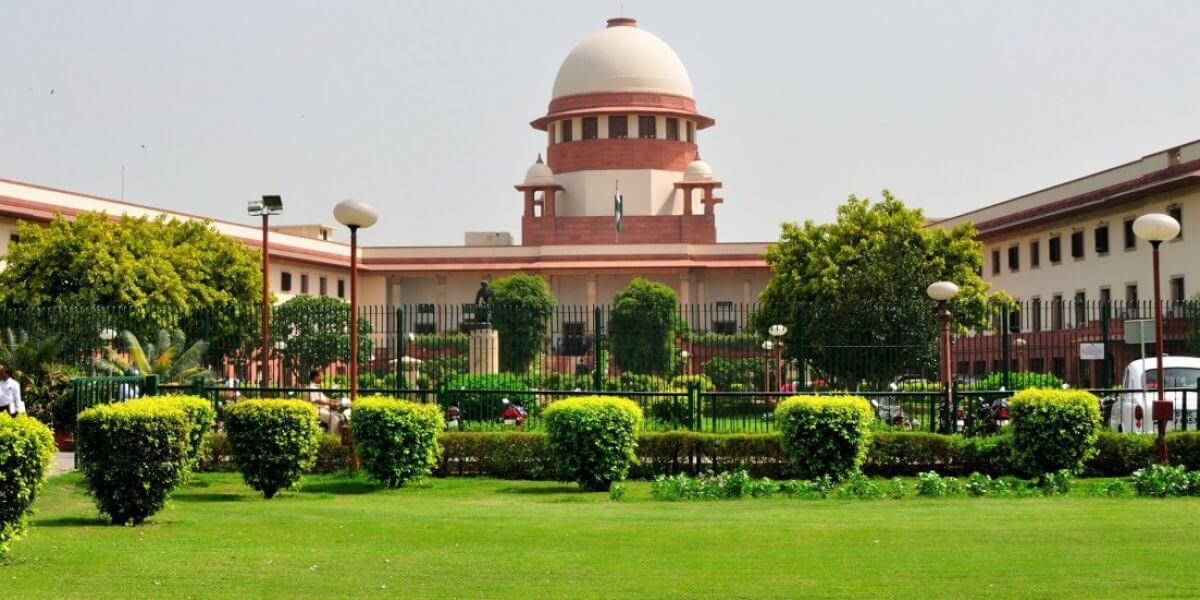
The Supreme Court of India is not just a court of law; it is the guardian of the Constitution, the protector of fundamental rights, and the final interpreter of justice. Since its establishment on 26th January 1950, the Supreme Court has played a pivotal role in shaping Indian democracy. In a nation as vast, diverse, and complex as India, the judiciary has often acted as the balancing force between the legislature and the executive, ensuring that neither oversteps its boundaries.
This post explores the origin, powers, jurisdiction, and landmark contributions of the Supreme Court of India in safeguarding democracy.
Historical Background
The roots of the Indian judiciary can be traced to the colonial period. The Federal Court of India (1937–1950) was the immediate predecessor of the Supreme Court. With the coming into force of the Constitution, the Supreme Court replaced the Federal Court and took over the role of the highest court of appeal and constitutional authority.
While the Parliament makes laws and the Executive implements them, the Judiciary ensures that these laws and actions conform to the Constitution. This separation of powers is what sustains democracy.
Structure of the Supreme Court
- Chief Justice of India (CJI) – Head of the judiciary
- Other Judges – As of 2025, the sanctioned strength is 34 judges including the CJI.
- Appointment – By the President of India on the recommendation of the Collegium system (comprising senior judges).
- Tenure – Judges serve until the age of 65 years.
This structure ensures independence of the judiciary while maintaining accountability.
Jurisdiction of the Supreme Court
The Supreme Court enjoys original, appellate, and advisory jurisdiction.
- Original Jurisdiction
- Disputes between the Union and States, or between States.
- Enforcement of Fundamental Rights through writ petitions (Article 32).
- Appellate Jurisdiction
- Appeals against judgments of High Courts in civil, criminal, and constitutional matters.
- Advisory Jurisdiction (Article 143)
- The President of India may seek the opinion of the Supreme Court on legal or constitutional questions.
Guardian of the Constitution
The most critical role of the Supreme Court is as the guardian and interpreter of the Constitution. Through the power of judicial review, it can strike down laws or executive actions that violate constitutional provisions. This ensures that democracy is not reduced to mere majoritarianism but remains guided by constitutional values.
Landmark Judgments
The Supreme Court has delivered numerous judgments that have shaped Indian democracy:
- Kesavananda Bharati v. State of Kerala (1973)
- Introduced the Basic Structure Doctrine: Parliament cannot alter the basic features of the Constitution such as democracy, secularism, and fundamental rights.
- Maneka Gandhi v. Union of India (1978)
- Expanded the scope of Right to Life and Personal Liberty (Article 21), ensuring due process of law.
- Indira Gandhi v. Raj Narain (1975)
- Asserted the independence of the judiciary during the Emergency, striking down unconstitutional amendments.
- Vishaka v. State of Rajasthan (1997)
- Recognized workplace sexual harassment as a violation of fundamental rights, framing guidelines for protection of women.
- Navtej Singh Johar v. Union of India (2018)
- Decriminalized homosexuality, affirming dignity and equality.
These decisions show the Court’s proactive role in expanding rights and deepening democracy.
Checks and Balances
A democracy thrives on the principle of checks and balances. The Supreme Court ensures that:
- The Executive does not misuse power.
- The Legislature does not pass unconstitutional laws.
- The Citizens have a forum to seek redressal against violations of rights.
For example, judicial interventions in environmental issues, governance reforms, and human rights have shown how the Court acts as a people’s protector.
Criticism of the Supreme Court
While the Court has been a strong pillar of democracy, it has also faced criticism:
- Judicial Overreach – Sometimes accused of entering into policy-making (e.g., bans, governance directions).
- Delay in Justice – Cases often drag for decades, undermining effectiveness.
- Opaque Collegium System – The appointment of judges lacks transparency.
Yet, despite these criticisms, the Court remains one of the most respected institutions of Indian democracy.
Current Role in Indian Democracy
In today’s fast-changing political and social environment, the Supreme Court continues to face challenges:
- Balancing development with environmental sustainability.
- Protecting civil liberties in the digital era.
- Addressing judicial backlog and accessibility issues.
- Maintaining independence in an era of strong political majorities.
Conclusion
The Supreme Court of India is not merely a judicial institution; it is the heart of Indian democracy. By interpreting the Constitution, protecting citizens’ rights, and keeping the other organs of government within their limits, it ensures that democracy is not just a theory but a lived reality.
In the words of Justice P.N. Bhagwati, “The Supreme Court is the sentinel on the qui vive—the vigilant guardian of the Constitution.”
The Court has, time and again, reminded the nation that democracy is more than the will of the majority; it is the rule of law, respect for rights, and faith in justice.


Leave feedback about this